"At the very most I am the altar boy of structuralism. Let's say I have rung the bell, the faithful have genuflected and the unbelievers have uttered cries of protest. But the service began a long time ago. The real mystery was not celebrated by me. [...] One can talk of a kind of structuralist philosophy which could be defined as the activity which allows one to diagnose what today is "(Foucault, 1967).
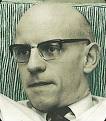
Michel Foucault was primarily a sociologist, focusing on modern human sciences, including biological, psychological and social, and a historian but his contribution to philosophical knowledge is considerable. His studies of psychology and the mentally ill led to the determination that what was considered acceptable treatment was based on culture bias. During this time, respected psychiatrists agreed with Foucault, further advancing and supporting his cause. "Sociological processes played the major role in defining 'madness' as an 'illness' and prescribing 'cures'(Van Kahm, 2010). Foucault attempted to prove that scientific research was the result of historical forces and not scientific truth.
Foucault studied prisoners and applied his observations to institutions such as hospitals, medical universities and architecture. He advanced concepts of criminal justice and medicine, beyond those of his peers, who limited their studies to psychiatry. Foucault believed that word names changed from the 18th to 19th century, resulting in a loss of meaning and a transformation of knowledge.Foucault bases this view on what he refers to as the "rediscovery of Kant, though his thought is significantly influenced by Nietzsche" (Van Kahm, 2010). Foucault inverted Kant's theory of "I think, therefore I am", and rather than ask "what, in the apparently contingent, is actually necessary, he suggests asking what, in the apparently necessary, might be contingent"(Van Kahm, 2010).
Language was seen, by Foucault, as a way that lead to higher order thinking. However, in the process of communicating, words change along with their meaning so there is no consistency in linguistics. Language is freed from the bindings of the physical world and represents nothing other than its own meaning.
More important to Foucault than linguistics was man, who represented an epistemological concept because of man's mortality. Man can only accomplish what the forces around him allow. "I (my consciousness) must, as Kant put it, be both an empirical object of representation and the transcendental source of representations"(Van Kahm, 2010). Foucault repudiated this thought as the underpinning of man's inability to merely allow forces of nature to dictate his outcomes.
