"We have to rid ourselves of the prejudice that a history without causality is no longer history"(Foucault, 1967).
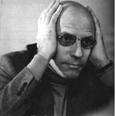
When Michel Foucault began his university studies, existential phenomenology was at its peak. He was influenced by his instructors to read and listen to Heidegger, Hegel and Marx. For a short while, he was influenced by existentialism and Marxism but quickly renounced these. His instructors steered him towards the study of history and science, which later contributed to his work on the history of social sciences utilizing a “'rationalist' understanding of the historical role of concepts that made them independent of the phenomenologists' transcendental consciousness" (Gutting, 2008).
Jean-Paul Sartre was recognized during Foucault's early years as a great French philosopher and indirectly influenced Foucault, primarily because of proximity and a shared hatred of the contemporary, materialistic middle class that stemmed from French culture. Both men also shared empathy for marginalized cultures, such as homosexuals, prisoners, those in poverty, etc. Both men played roles in political venues. Foucault did not accept the comparison to Sartre and spent much of his time denying the resemblance. "Philosophically, he rejected what he saw as Sartre's centralization of the subject (which he mocked as 'transcendental narcissism')" (Gutting, 2008). Some people felt that Foucault spent too much time denying the similarity between the two men.
Foucault was influenced by Georges Bataille and Maurice Blanchot, "where he found the experiential concreteness of existential phenomenology without what he came to see as dubious philosophical assumptions about subjectivity" (Gutting, 2008). These authors views contributed to Foucault's development of his “archaeological” and “genealogical” methods of writing about his research and the corresponding history that form Foucault's criticism of the sciences as they were accepted at the time.
