"The term 'folklore' is nothing but a hypocrisy of the 'civilised' who won't take part in the game, and who want to hide their refusal to make contact under the mantle of respect for the picturesque...Man is irrevocably a stranger to dawn. It needed our colonial way of thinking to believe that man could have remained faithful to his beginnings and that there was any place in the world where he could encounter the essence of the 'primitive' "(Foucault, 1994).
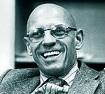
Foucault wrote from 1945 to the mid-1980s, which was the period when the French Communist Party (PCF) was an influential force, gaining strength in World War II as part of the Resistance, and comprised of many thousands of members. The PCF was influential in workplaces and unions, influencing elections, and respected by most intellectuals.
The PCF joined sides with the Russians during the Cold War, promoting Marxism, and following Russia’s positions on all issues – even philosophy- preventing democratic discussion inside the party.
Foucault became a member of the PCF in the early 1950s, but by the mid-1960s a higher education government commission lured him to Tunisia, which led to him being considered to be a "right wing technocrat". Foucault's students’ anti-imperialist commitment caused him to change political beliefs and move to the left. Shortly after, he returned to France.
In 1971, Foucault assisted in establishing a prisoners’ rights group, running the office, and answering the phone, taking part in protests , even being arrested after fighting with a policeman.
Foucault moved left or right depending on the world events developing around him, but he maintained two tenets: rejection of the liberal capitalist view of the world, which claimed that society was constantly improving, and denied there were any fundamental social conflicts; and the PCF’s version of history, which he identified as Marxist. Much of his work is understood as an argument against the PCF’s world views, which he often criticised.
Foucault’s radical approach led to problems explaining how his philosophy related materialism in society, where his ideas came from, or the roles his ideas played in the changing world.
